
Yes. In addition to faster cooking times, many users find induction offers:
Gas still appeals to cooks who prefer visible flame control or need a flame to char vegetables and other various items while cooking.
Yes. In addition to faster cooking times, many users find induction offers:
Gas still appeals to cooks who prefer visible flame control or need a flame to char vegetables and other various items while cooking.
Most users adapt quickly. The biggest adjustment is that induction responds almost instantly to temperature changes, unlike electric coil or radiant cooktops that take a while to heat up and retain heat after being turned down. In the earlier days of induction in the U.S., ranges had buttons instead of knobs to adjust heat levels. The only models that had knobs were very high end and likely to expensive for most home kitchens. Fast forward to today and everyday brands such as GE, LG and Bosch carry induction ranges with knobs, allowing for everyday home chefs to have the control they desire.
Sometimes. Users may hear humming, buzzing, or clicking sounds, especially when using high power settings or certain cookware. These sounds are typically normal. The clicking sound is the magnets cycling on and off while they are maintaining the heat setting.
Portable induction hobs have an internal fan to keep them from overheating that will run quite frequently while they are on. When doing UPPCO induction demonstrations, these portable units have also emitted high-pitched tones that we've noticed mostly affects persons in their teen years - other bystanders can't hear it.
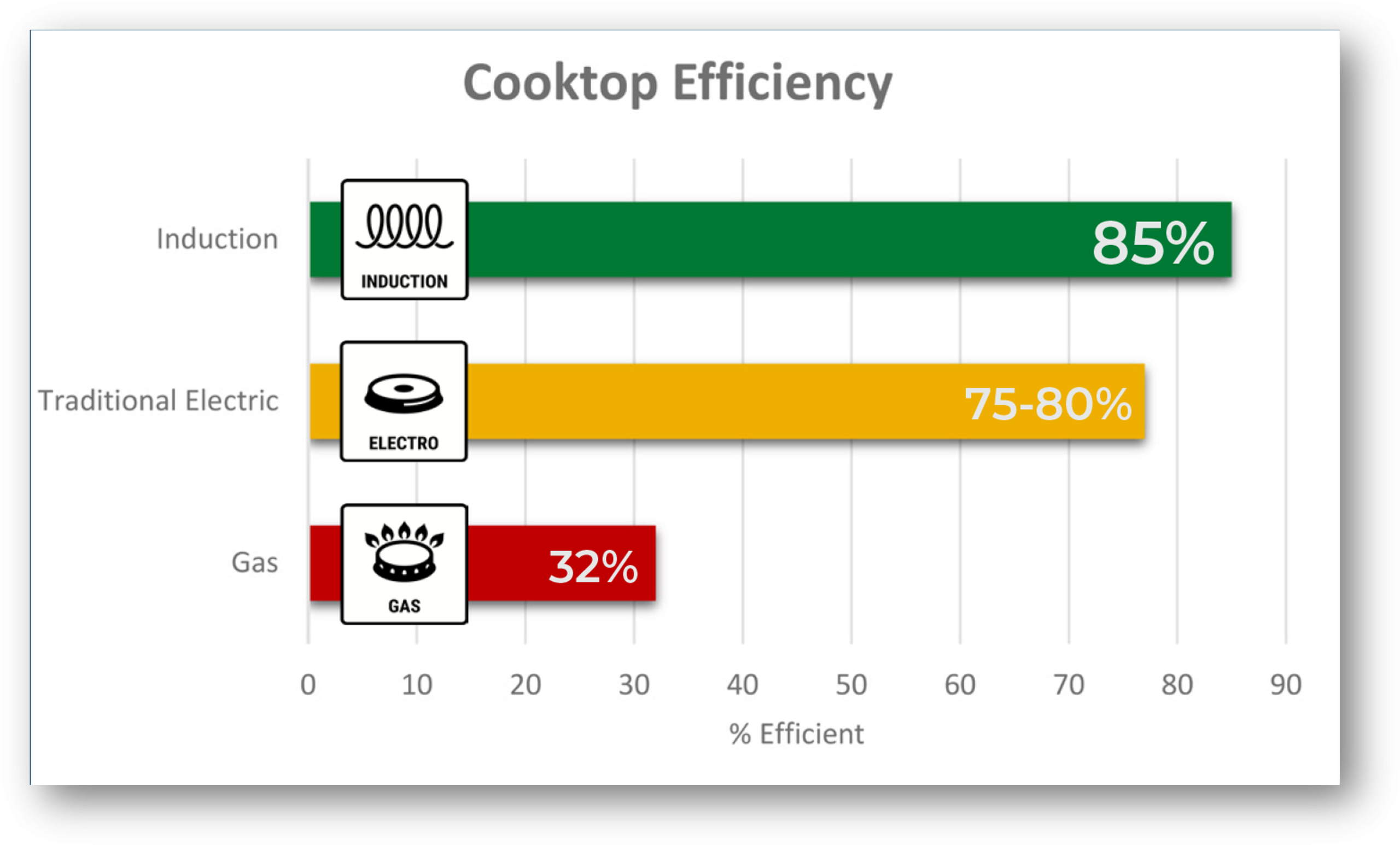
Yes. Induction transfers most of its energy directly into the cookware, making it more than 50% more efficient than gas and 5-10% more efficient than conventional electric cooking methods.
Most full-size induction ranges require a dedicated 220 or 240-volt circuit similar to many electric ranges. However, there are models coming out now that can plug into a standard 120-Volt outlet:
- Copper's "Charlie": also has an internal battery and can still be used during a power outage.
- Wattsipper: has many models. Specifically designed for apartments, multifamily housing, and retrofit projects
The only other exceptions are small, portable single- or double-burner countertops units, which can plug into a standard 120-volt wall outlet.
The short answer: nothing. Most induction ranges detect incompatible cookware and will either display an error message or simply not activate the cooking zone. Nothing will heat up.
Never fear, fellow Yoopers - yes! Cast iron is highly compatible with induction cooking. You can continue to use your beloved family heirlooms for generations to come.
This is a common concern. Modern induction ranges are generally considered safe when manufacturers' guidance and medical-device recommendations are followed. People with implanted medical devices should review device-specific guidance and consult their healthcare provider.
Overall, yes. Common safety advantages include:
- No open flame
- No harmful pollutants affecting kitchen air quality
- Automatic shutoff when cookware is removed
- Child lock features
- A surface that stays relatively cooler than traditional cooktops.
While the cooktop can still become warm from heat transferred from the pan, the surface stays cooler than a traditional ceramic top electric resistance range. The surface also cools much faster because it doesn't get as hot to begin with.
Induction cooktops use electromagnetic energy to heat the cookware directly rather than heating a burner first. The pan itself becomes the heat source, resulting in faster heating and more precise temperature control.