
Upgrade to the better choice for your home kitchen.
An induction cooktop or range uses electromagnetic fields to generate heat directly through the pot or pan. Essentially, the cookware becomes its own source of heat. Compared to traditional stoves, which warm food by radiating heat to cookware via a flame or electric burner, induction cooking yields a number of benefits. Read on for an overview of those benefits, or take a deep dive with this two-year field study that evaluated induction cooking in 31 Michigan homes (and half of those homes were UPPCO customers right here in the upper peninsula!).
It’s not magic, it’s science.
Say goodbye to deciding if it’s too hot to cook in the house tonight. Induction cooking, unlike cooking on a gas or electric resistance (traditional coil) range, eliminates a large portion of heat lost to the atmosphere as it transfers to your pot. It’s not magic, it’s science. Specifically, the science of induction, where strong electric fields can create heat. This is because the energy is transferred directly into the pan by the electric fields (magnetism) between the pot and the induction surface. The heat is generated in the base of the pan. This also contributes to why induction is so efficient. It’s eliminating a step in the cooking process. Traditionally, the burner or flame heats the air around a pot, then the pot becomes hot, and eventually cooks your food. With induction, the pot is the heat source. The need to heat the air around it first, to then warm the pot and cook the food is eliminated. Interested? Read on to see if the many benefits of induction align with your cooking and home comfort needs.

Speed and Precision
The efficient, direct heating of cookware means that induction cooktops allow for quicker and more precise cooking. In fact, Consumer Reports found that induction cooktops can boil a pot of water 20 to 40 percent faster than the best gas and traditional electric ranges! Because changes in heat settings are instantaneous and heat is evenly distributed throughout cookware, you’ll also have more control over your cooking. Become a better cook who gets food on the table faster!

Health and Safety
Not only can induction cooktops save time, but they are safer, too. There is no open flame or residually hot cooking surface, reducing the risk of burns. If a burner is accidentally left “on,” there’s no need to worry about nearby objects catching fire, as the cooktop does not get hot and will not function at all without a pot or pan placed on it. Induction cooktops also eliminate the pollutants released by gas stoves, reducing environmental emissions and improving indoor air quality for your family. According to a 2022 study, 12.7% of current childhood asthma in the United States is attributable to gas stove use. Breathe easier when you make the switch to induction.

Easy Cleanup
If you’re used to attempting to clean up spills burnt onto a traditional electric cooktop or stuck under the grates of a gas stove, then you’ll appreciate the ease of cleanup provided by an induction cooktop. Since the surface itself is not heated, when something spills or boils over, it doesn’t burn to the surface. No need for a razor blade to scrape. No taking apart grates on a gas range or the time-consuming task of soaking and scrubbing. Simply wipe the surface clean and continue with your cooking.

Efficiency
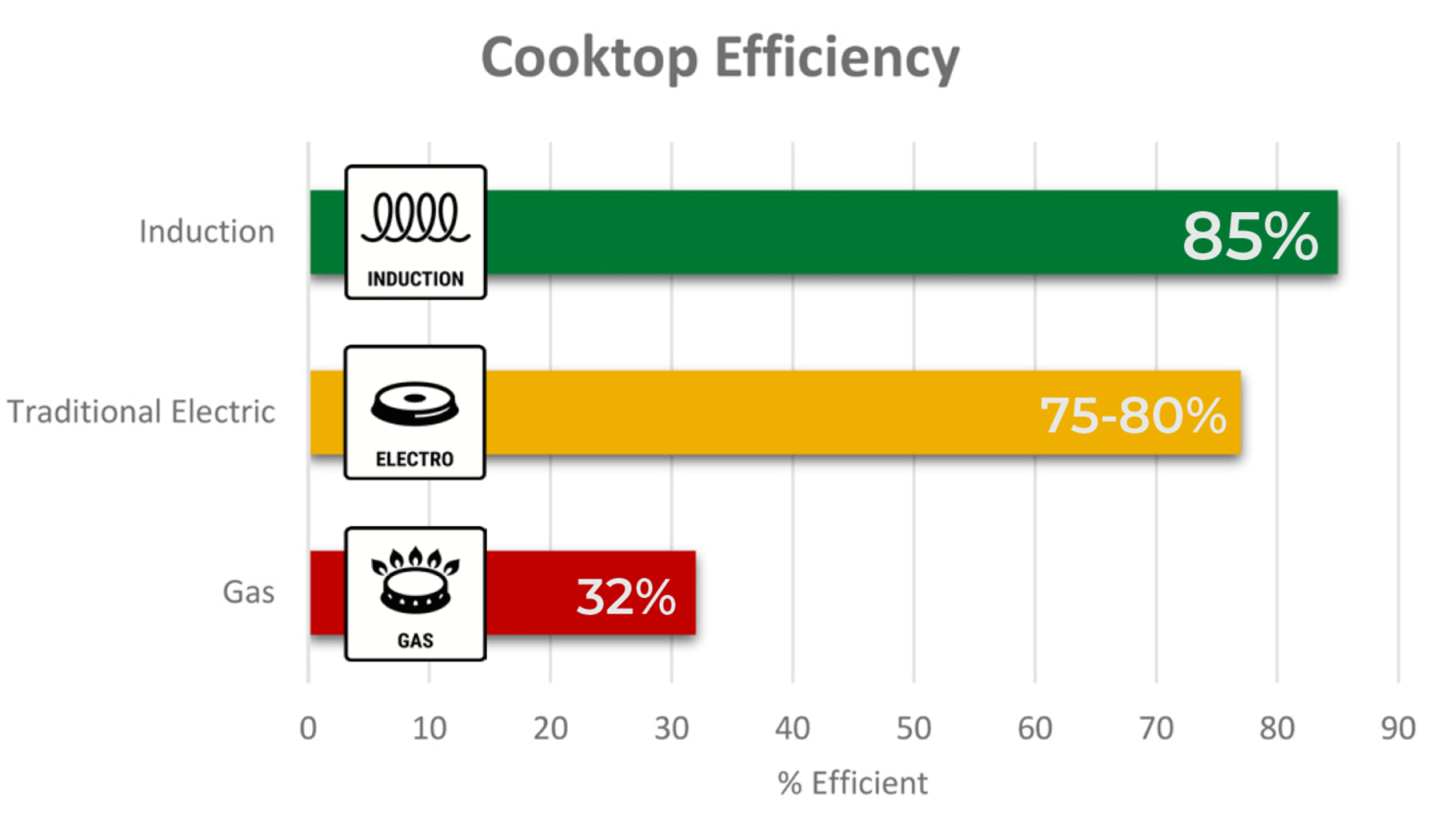
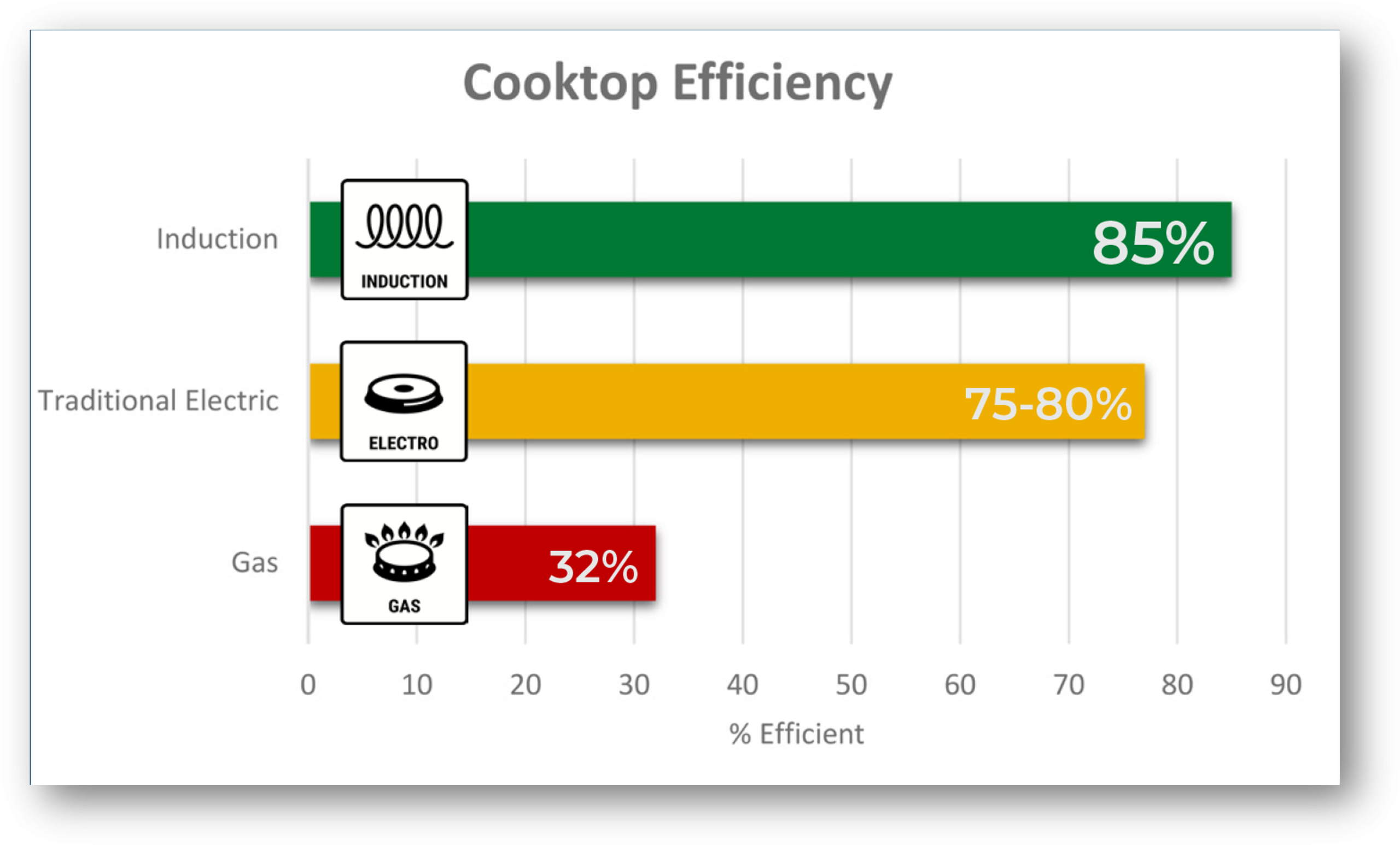
Because cookware itself is heated on an induction stove, less energy is lost to the cooking surface or the air, and cooking becomes more efficient. According to ENERGY STAR®, induction cooktops transfer about 85 percent of generated energy to cookware, compared to 75 to 80 percent for electric and about 30 percent for gas.

Home Comfort
More than half of household energy use typically goes toward heating and cooling. Traditional gas and electric ranges release a significant amount of heat into your living space. On a nice summer day, this increases temperatures drastically in your home making it quite uncomfortable or forcing your air conditioner to work harder. Imagine how much heat is generated, and how counterproductive you’re actions are to the overall temperature of your home merely from cooking a meal. Say goodbye to deciding if it’s too hot to cook in the house tonight. Induction cooking heats the cookware directly, minimizing wasted heat and reducing the amount of heat released into the air. The result? A more comfortable kitchen, lower cooling costs, and no more avoiding the stove on hot days.

Environment
Induction is a simple way to create a healthier home and lower your carbon footprint at the same time. Because induction cooking doesn’t burn fuel, it produces no direct combustion pollutants, helping supporting cleaner, healthier communities and protect indoor air quality as well. Reducing environmental emissions makes for cleaner air, a healthier environment, and a more sustainable future for everyone.
FAQ
Induction cooktops use electromagnetic energy to heat the cookware directly rather than heating a burner first. The pan itself becomes the heat source, resulting in faster heating and more precise temperature control.
Never fear, fellow Yoopers - yes! Cast iron is highly compatible with induction cooking. You can continue to use your beloved family heirlooms for generations to come.
Most full-size induction ranges require a dedicated 220 or 240-volt circuit similar to many electric ranges. However, there are models coming out now that can plug into a standard 120-Volt outlet:
- Copper's "Charlie": also has an internal battery and can still be used during a power outage.
- Wattsipper: has many models. Specifically designed for apartments, multifamily housing, and retrofit projects
The only other exceptions are small, portable single- or double-burner countertops units, which can plug into a standard 120-volt wall outlet.
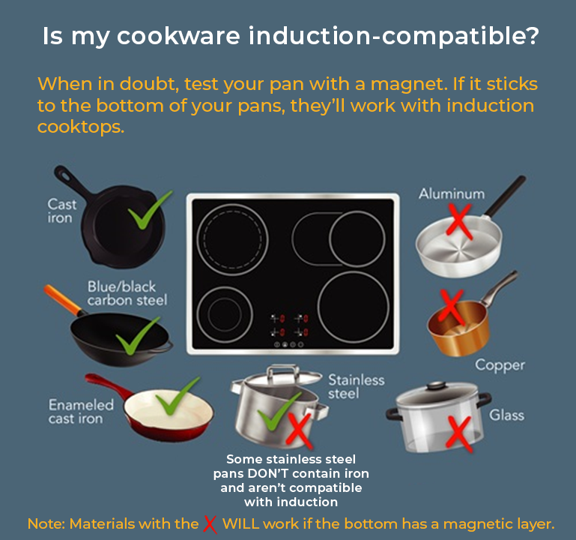
It’s not likely that you’ll have to buy a whole new set of cookware when making the switch to induction. Many “normal” pieces of cookware can be used with an induction cooktop. That treasured family cast iron pan is actually one of the best options for induction cooking! You can use a magnet to test whether your pots and pans will work – if the magnet sticks to the bottom, the cookware can be used.
Yes. Induction transfers most of its energy directly into the cookware, making it more than 50% more efficient than gas and 5-10% more efficient than conventional electric cooking methods.
Most users adapt quickly. The biggest adjustment is that induction responds almost instantly to temperature changes, unlike electric coil or radiant cooktops that take a while to heat up and retain heat after being turned down. In the earlier days of induction in the U.S., ranges had buttons instead of knobs to adjust heat levels. The only models that had knobs were very high end and likely to expensive for most home kitchens. Fast forward to today and everyday brands such as GE, LG and Bosch carry induction ranges with knobs, allowing for everyday home chefs to have the control they desire.
Yes. In addition to faster cooking times, many users find induction offers:
Gas still appeals to cooks who prefer visible flame control or need a flame to char vegetables and other various items while cooking.
Overall, yes. Common safety advantages include:
- No open flame
- No harmful pollutants affecting kitchen air quality
- Automatic shutoff when cookware is removed
- Child lock features
- A surface that stays relatively cooler than traditional cooktops.
While the cooktop can still become warm from heat transferred from the pan, the surface stays cooler than a traditional ceramic top electric resistance range. The surface also cools much faster because it doesn't get as hot to begin with.
Sometimes. Users may hear humming, buzzing, or clicking sounds, especially when using high power settings or certain cookware. These sounds are typically normal. The clicking sound is the magnets cycling on and off while they are maintaining the heat setting.
Portable induction hobs have an internal fan to keep them from overheating that will run quite frequently while they are on. When doing UPPCO induction demonstrations, these portable units have also emitted high-pitched tones that we've noticed mostly affects persons in their teen years - other bystanders can't hear it.
You’ll pay more up front for an induction cooktop, but prices have fallen considerably in recent years, and you may be eligible for federal rebates with qualifying models. Plus, time = money, and induction cooktops allow you to spend less time cooking and cleaning.
The short answer: nothing. Most induction ranges detect incompatible cookware and will either display an error message or simply not activate the cooking zone. Nothing will heat up.
This is a common concern. Modern induction ranges are generally considered safe when manufacturers' guidance and medical-device recommendations are followed. People with implanted medical devices should review device-specific guidance and consult their healthcare provider.