
Save on Home Water Heating
Second only to space heating and cooling, water heating is the next largest source of energy consumption in U.S. homes.
We use hot water every day for showering, doing dishes, washing clothes, and a multitude of other tasks—and the cost to heat that water adds up, especially if you have a standard electric or propane water heater.
While standard electric resistance water heaters are relatively inexpensive to purchase, they are costly to operate. On the other hand, heat pump water heaters cost more upfront, but provide significant savings over time. Advanced heat pump technology can slash electricity consumption by up to 70%.
What Is a Heat Pump Water Heater?
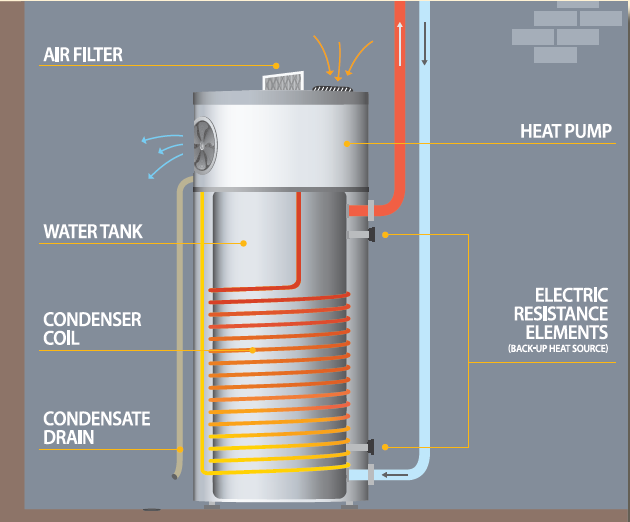
Heat pumps are highly efficient because they operate by moving heat instead of creating heat—basically working like a refrigerator in reverse.
Heat pump water heaters function essentially the same as a home air source heat pump system. A fan in the top section of the water heater draws surrounding ambient air into the heat pump. Heat energy is extracted from the air, which is transferred to a fluid called refrigerant. The refrigerant is compressed, becomes hot, and passes through the condenser coils—heating the water in the tank. Cooled, dehumidified air exits the heat pump, and a very small amount of distilled water leaves the unit through a condensate drain.
Water Heater FAQs
There are many sizes of water heaters. Heat Pump water heaters are considered a tall model. Small 15-30 gallon water heaters located under a counter, if replaced with a HPWH, would need to be relocated. A typical 50 gallon HPWH could be 60 to 65 inches tall and 22 to 27 inches in diameter.
Yes. A customer was asked if he was happy with the performance of his HPWH. His response was, “Very, the electric bill is way down.”
Standard electric water heaters at 50 gallons use approximately 3,531 kWh per year while a hybrid uses 950 kWh per year. At $0.21 per kWh a 50 gallon heat pump water heater will save $542.01 in the first year. Current examples of savings exists on water heater savings cards for the top 3 manufacturers based on $0.12.
Because heat pump water heaters draw in heat from ambient air, they need to be located in a minimally warm area with enough open space for air to circulate. Generally a basement that stays 50F and an open space of 700 cubic feet will meet the needs for a heat pump water heater to be able to absorb heat effectively.
Heat pump water heaters have a six- or ten-year warranty. With proper maintenance they may last much longer. Annual maintenance includes draining the tank to flush mineral deposits from the base of the tank once or twice a year depending on the water quantity. The heat pump air filter should be checked and cleaned when the alarm or indicator light is active. Filter cleaning should happen every 6 months to a year depending on surrounding conditions, and heat pump water heaters located in dusty areas may require monthly cleaning. HPWH filters can typically be vacuumed or rinsed in the sink.
Yes heat pump water heaters have a digital control panel which allows you set the temperature you would like. New units even indicate if water temperature set point may cause a scald risk.
Yes, if you are comfortable making both plumbing and electrical connections. Please note heat pump water heaters are quite large and heavy. Moving and positioning the unit may take 2 people. Please consult local building permit authority to ensure installation in accordance with the current code.
While the default setting is typically hybrid/auto mode, to maximize efficiency and your energy savings, you can choose to operate the water heater in “heat pump only/efficiency” mode. To see and learn about all of your heat pump water heater mode options, you can use the digital control panel on the water heater.
Most minimum efficiency or entry level water heaters do not qualify for rebates as they are expensive to operate over the course of their lifetime and use more energy than the unit is eligible for rebate. Heat pump water heaters replacing propane or natural gas may not qualify for a rebate.